

Do you often feel completely drained of energy by the middle of the workday? Have you noticed that your favorite pants are getting tight around your waist, even though your diet has not changed? You might be dealing with metabolic syndrome symptoms and not realize how important it is to get them checked out.
When life gets busy and money is tight, it’s easy to ignore these small, gradual changes. Many of us put off going to the doctor because we worry about a large medical bill. Plus, that’s just getting older, right?
The truth is, while age can slow you down a bit, symptoms like these are often early signals that something much bigger is happening to your body. Signs that don’t seem like a big deal might actually be metabolic syndrome symptoms that can lead to much bigger threats in the future.
Even with no pain or obvious discomfort, your body may be silently screaming for help with a cluster of health issues that you don’t even know are there. Fortunately, learning to spot these warning signs early will help you turn them around for a longer, healthier life.
What Is Metabolic Syndrome?
Metabolic syndrome (also known as MetS) is not a single, standalone disease. Instead, it is a clinical combination of five specific health warnings.
If you have just one of these warning signs, your doctor will help you treat it. But if you have three or more of them together, you have metabolic syndrome.
To understand how this condition works, think about your metabolism as a classic kitchen stove.
In a completely healthy body, your metabolism, or inner stove, “cooks” food cleanly to create energy for your muscles and organs.
When you develop metabolic syndrome, the fuel lines in your body get clogged, and they struggle to process food as well. This problem is usually caused by insulin resistance.
Insulin is a critical hormone released by the pancreas that tells your cells to let sugar (glucose) in to use for energy.
If the cells stop “listening” to insulin, known as insulin resistance, your pancreas has to work harder to make more. As the resistance builds, the fuel lines become more clogged, and sugar stays in the bloodstream. This process eventually leads to a kitchen fire in the form of weight gain, metabolic syndrome, diabetes, and other chronic conditions.
Other factors that can cause or worsen metabolic syndrome include obesity, inactivity, poor nutrition, hormone imbalances (including menopause), and genetics.

The 5 Metabolic Syndrome Symptoms
Most metabolic syndrome symptoms are completely invisible. You can’t feel your cholesterol changing or your blood sugar rising. That’s why regular checkups and health screenings are absolutely vital.
During a routine checkup, your healthcare provider will assess these potential metabolic syndrome symptoms:
Large Waistline
Because you can see it, this symptom is the most obvious and easiest to catch. Sometimes called apple-shaped obesity, carrying extra fat right around your stomach and your middle section is a common metabolic syndrome symptom.
This type of fat is dangerous because it wraps around your vital internal organs.
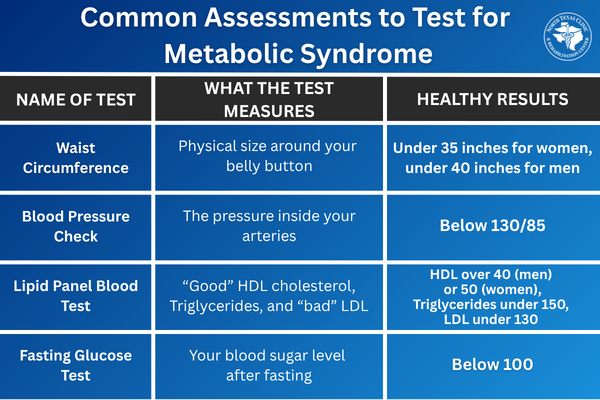
For non-pregnant women, a waist measurement of 35 inches or more is a warning sign. For men, that number is 40 inches or more.
High Triglycerides
Triglycerides are a specific type of fat found directly in your blood. When you consume more calories than your body can use, your body converts them into fat.
A healthy triglyceride level should be below 150 milligrams per deciliter. A level of 150 mg/dL or higher is a major warning sign.
Low HDL Cholesterol
HDL is often called good cholesterol. This helpful molecule acts like a tiny vacuum cleaner, scooping up bad fat from your blood vessels. If you do not have enough HDL, your blood vessels can get clogged.
For men, a safe HDL level must be above 40 mg/dL. For women, it must be above 50 mg/dL. Levels chronically below these numbers are considered metabolic syndrome symptoms and are unsafe.
High Blood Pressure
Blood pressure measures how hard your blood pushes against the walls of your arteries as your heart pumps. Healthy blood pressure is usually around 120/80 mmHg. If your numbers reach 130/85 mmHg or higher, your heart is working too hard.
High Fasting Blood Sugar
This test measures the amount of glucose in your blood after you have gone without food overnight. A normal fasting blood sugar number should be under 100 milligrams per deciliter. If your blood sugar reading is 100 mg/dL or higher, it means your body is struggling with insulin resistance.
Again, having only one or two of these signs means that you should treat them and stay on top of your health. But you do not yet have diagnosable metabolic syndrome.
However, if you have three or more metabolic syndrome symptoms, you have the condition.

How Metabolic Syndrome Impacts Your Health
Having MetS is like leaving a small kitchen fire burning unsupervised. If you do not put it out, the fire will eventually spread and destroy the whole house. The cluster of issues acts like a biological domino effect that damages your blood vessels, heart, and other organs.
When your blood vessels are constantly strained by high pressure and high levels of fat, they become narrow and stiff. This restriction blocks the smooth flow of oxygen to your vital organs.
If you leave these metabolic syndrome symptoms untreated, your risk of cardiovascular disease doubles. This chronic condition can lead to deadly heart attacks and strokes.
Additionally, the constant strain of insulin resistance damages your pancreas, increasing your risk of prediabetes and Type 2 diabetes.
Other issues that can arise from this cluster of symptoms include kidney and liver disease, reproductive disorders, sleep apnea, and cognitive decline.
Essentially, when your blood vessels don’t work well, everything else struggles to function correctly as well.
The Importance of Catching Warning Signs Early
The most dangerous part of metabolic syndrome is that it loves to hide in silence. Because high blood pressure and high blood cholesterol do not cause daily pain, many under-insured adults skip their annual checkups to save money.
Unfortunately, waiting not only leads to dangerous health conditions, but it also ends up costing a lot more when you have to treat more complex issues. Plus, if it gets serious enough, having a heart attack or stroke can cause permanent disability, preventing you from working to provide for your family.
Those risks are scary, but fortunately, they can be prevented and reversed if MetS is caught early.
Especially in the earliest stages or before developing symptoms at all, you don’t need expensive prescriptions to heal or maintain your body.
By making simple changes to your daily habits, you can lower your blood pressure, fix your cholesterol, and eliminate your insulin resistance before permanent damage occurs. These changes include a nutritious, balanced diet, regular physical activity, stress reduction, and healthy sleep.
Other changes include smoking cessation, limiting alcohol intake, losing weight as needed, and getting regular checkups.

Most Important Assessments Every Adult Needs
You cannot manage your health without at least recognizing what healthy numbers look like.
Every adult between the ages of 30 and 60 should visit their healthcare provider to track these basic health assessments at least once a year.
If you have a family history of diabetes or high blood pressure, tracking these specific assessments is even more critical for longterm health.
The chart below highlights healthy results for the average person. Results beyond these numbers may indicate you are dealing with metabolic syndrome symptoms.
Treatments for Metabolic Syndrome Symptoms
Every person is unique. Therefore, treatments for metabolic syndrome are highly individualized.
Your care plan depends on your age, your specific test numbers, and many other factors. Healthcare providers need to consider your body as a whole to determine the best approach to treatment.
However, the first line of defense always includes making sustainable changes to your daily lifestyle. Your provider will help you focus on heart-healthy nutrition. This means eating more high-fiber foods like beans and whole oats while avoiding cheap vegetable oils, highly processed foods, and sugary drinks.
Physical activity is also vital. Doctors recommend getting at least 150 minutes of moderate exercise each week, or 30 minutes on at least 5 days.
Moderate exercise means walking at a brisk pace where you can still talk, but you cannot sing. This level of activity helps your muscles absorb blood sugar, which directly lowers your insulin resistance.
And as previously mentioned, quitting smoking and reducing or eliminating alcohol are strongly encouraged and can make an enormous difference.

Common Medications for Specific Metabolic Syndrome Symptoms
When lifestyle changes alone are not enough to lower your risk, targeted medications can help protect your organs.
If your blood pressure numbers stay at 130/85 mmHg or higher, your doctor might prescribe a low-cost blood pressure pill. These pills relax your blood vessels so your heart doesn’t have to pump so hard.
If your lipid panel shows high triglycerides or low good cholesterol, you may need a daily medication called a statin. Statins help your liver clear out dangerous fats from your bloodstream before they can block the blood flow to your heart.
For high fasting blood sugar, doctors often use a reliable pill called metformin. Metformin works by reducing the amount of sugar your liver releases into your blood. It also helps your cells become more sensitive to insulin again so that sugar can enter your cells and turn into clean energy.
Some people need to be on these medications for the rest of their lives. But some people only need to take them until their conditions are successfully reversed and their lifestyle habits are better suited for their overall health.
Medical Weight Loss and GLP-1 Medications
Carrying extra weight around your stomach is a major root cause of metabolic syndrome. Dropping just 5% to 10% of your total body weight can completely reverse your symptoms. For example, if you weigh 200 pounds, losing 10 to 20 pounds can bring your blood sugar and blood pressure back to completely normal levels.
For many people, losing weight feels nearly impossible due to a variety of factors, such as hormonal imbalances, chronic pain, and so many others.
In these cases, modern primary care providers can prescribe medical weight-loss plans that include GLP-1 medications. You might know these medications by brand names like Ozempic, Wegovy, or Mounjaro.
While these medications have developed a bit of a bad reputation (mostly due to some celebrities overusing or misusing them), they are lifesavers for the people who truly need them.
GLP-1 medications are built to mimic a natural hormone in your gut. They work by slowing your digestion, so you feel full for longer. They also send signals to your brain to reduce intense food cravings. Most importantly, these medications improve the way your pancreas releases insulin, which helps your body burn fuel cleanly rather than store it as dangerous belly fat.
If losing weight feels outside of your control and you’re showing signs of having metabolic syndrome symptoms, GLP-1s might be an excellent and appropriate solution for you.
Questions to Ask Your Doctor About Metabolic Health
- Are my current blood pressure numbers within a safe and healthy range?
- What do my latest blood test results show about my cholesterol levels?
- Do my fasting blood sugar numbers show any early signs of insulin resistance?
- Are there simple, low-cost changes I can make to my daily diet to protect my heart?
- How often should I return to the clinic to have my metabolic numbers checked?
- Is medical weight loss right for me?
Affordable Checkups for Metabolic Syndrome Symptoms
We understand that medical costs can feel overwhelming when you are working hard to make ends meet. At North Texas Clinic & Rehab, we do not want a lack of insurance to stand between you and a healthy life. We keep our checkup prices fair and as low as possible so you can get the testing you need without breaking your budget.
Our clinic also works with most major medical insurance plans (including Medicaid and Medicare) to keep your out-of-pocket costs low. If you do not have health insurance, we will partner with you to create affordable payment plans that fit your monthly income. We also accept CareCredit, which lets you pay for your health screenings over time.
Our clinic in Hurst is a completely judgment-free space. We care about your health, not your financial status. If you are worried about metabolic syndrome symptoms, we are here to help. Schedule an appointment at North Texas Clinic & Rehab today.