
As amazing as having children is, we know how stressful and, often, painful it can be. Your body goes through a lot during pregnancy and labor, and recovery takes time. Time that can be hard to find when you’re also taking care of your newborn. Joint and back pain after pregnancy is common, but you don’t have to suffer in silence.
From struggling to lift and carry your little one to leaning over their crib, your back is working overtime. Even the long periods of sitting while feeding your baby or pumping can be agonizing.
Plus, many new moms are also dealing with stress and lack of sleep, which can make it even harder for muscles and joints to heal.
Caring for a new baby is hard work, and that’s why it’s so important that you also take care of yourself. Persistent back pain after pregnancy makes that hard to do, but we’re here to help.
Why Back Pain Continues After Pregnancy
You can see how much your body has to change to support your baby’s growth. But what you don’t see are many of the hormonal changes that continue even after delivery.
Every month during menstruation, your body releases a small dose of a hormone called relaxin. It relaxes the uterus to prepare for a possible conception. Then, when you become pregnant, your ovaries and placenta produce more relaxin for the duration of the pregnancy. Relaxin helps your ligaments, joints, and muscles relax and stretch as your body stretches with your baby’s growth. It also helps your pelvis prepare for childbirth.
But this crucial hormone doesn’t just disappear the second your baby is born. It can stay in your body for months after delivery. While increased flexibility helps you during pregnancy and birth, it can cause instability and pain afterward.
On top of that, most women’s core muscles stretch and weaken during pregnancy. The more your center of gravity shifts as your baby grows, the more you have to force your lower back to accommodate the extra weight. As your body returns to normal, your back muscles have to work twice as hard to make up for a weaker core and imbalance.
Finally, pregnancy is a common cause of sciatica, which can linger even after your little one’s arrival.
All of this can cause constant pain and tension long after you’ve given birth.

How Chiropractic Care Helps Back Pain After Pregnancy
Regardless of how common it is, you do not have to live with postpartum back pain or wait for it to go away on its own.
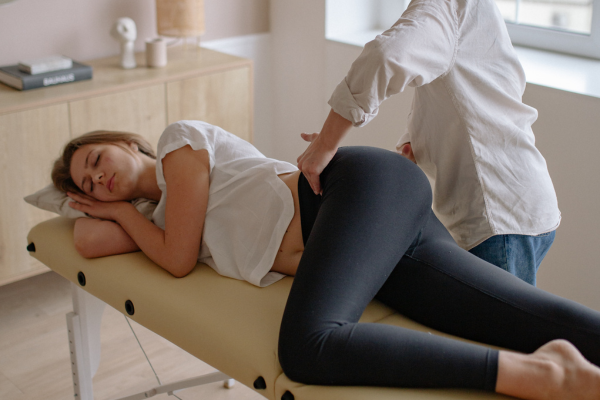
Chiropractic care can ease joint and back pain, both during pregnancy and after.
When your pelvis and spine are out of line, which happens as your middle stretches, your nerves can become irritated, joints become stressed, and muscles can spasm. Gentle chiropractic adjustments realign these changes, bringing you quick comfort and faster healing. Adjustments can also help ease headaches, neck pain, and other postpartum joint pain that many women experience.
A chiropractor can also suggest specific stretches and easy exercises to help you regain strength in your core to better support your back.
Best of all, chiropractic care works with your body naturally, reducing the need for pain medication or other costly interventions. For the majority of people, it is a safe option, even after a C-section, once you’ve gotten the 6-8 week all-clear sign from your doctor.
Home Remedies for Postpartum Joint Pain
Since chiropractic care may not be possible for everybody, having safe ways to relieve pain and soothe discomfort at home is essential. Fortunately, there are many affordable and effective solutions, some that you probably already have at home.
Using a combination of ice and heat can make a world of difference for a hurting back.
A cloth-wrapped ice pack or even a bag of frozen peas reduces swelling and relieves pain.
For maximum comfort after cold therapy, try replacing it with a heating pad or taking a warm bath. Heat will help relax your muscles, reducing pain even more. Many people find that adding Epsom salts to the bath increases comfort and pain relief.
Another way to reduce back pain after pregnancy and increase healing is to try to manage stress. (Challenging with a new baby, we know.) Meditation, yoga, deep breathing, walking: all of these methods can help relax both the mind and body, which boosts your overall health and wellness. Light exercise can also increase your core and muscle strength while reducing stress.

Pain Reliever Use When Breastfeeding
If natural remedies aren’t tackling the pain well enough, you might consider over-the-counter painkillers.
Both Ibuprofen and acetaminophen (or paracetamol in the U.K.) are considered safe for nursing mothers, especially at the smallest recommended dose. While tiny amounts of the medications may pass into the breast milk, it won’t be enough to harm your child.
But if you are at all unsure, always talk to your doctor before taking any medication while breastfeeding. Your healthcare provider can give you specific recommendations and may want to prescribe stronger but safe medications to help you manage your back pain after pregnancy.
Exercises to Heal Postpartum Back Pain
We know that the last thing you want to do when you’re hurting is move. But slow, gentle movement will actually ease back pain much more than lying in bed all day.
Simple stretches and exercises can loosen tight back muscles, increase joint flexibility, and strengthen your weakened stomach and pelvic muscles.
Some, like belly breathing, pelvic tilts, and kegels, are considered safe for most people, even before the 6-8 week checkup after a cesarean (C-section). Still, it’s always best to talk to your healthcare provider or chiropractor first! Even gentle movement can cause harm if you’re still recovering from surgery or a difficult labor.
Then, once you’re cleared, listen to your body. Start slowly, and if you feel a sharp pain or something doesn’t feel right, stop immediately.
After you’ve received the ‘Okay’ from your provider 6-8 weeks after labor, start slowly working up to more movement. Brisk walks, swimming, yoga, and Pilates are all excellent choices for rebuilding core strength and improving back pain.
But before you put on your running shoes, start with these:
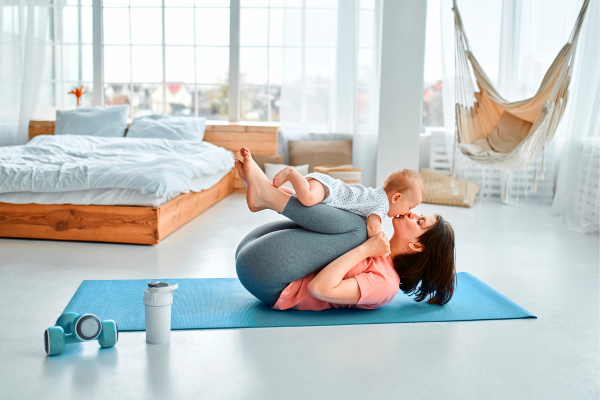
Core and Back Strengthening Moves for Back Pain After Pregnancy
- Belly breathing: Lie on your back, knees bent or legs down, whichever is more comfortable. Place your hands on your stomach and take a slow, deep breath through your nose and into your stomach, feeling your belly stretch. Hold for 3 seconds, then slowly breathe out through your mouth until you feel your abs contract. Hold for 3 seconds, and repeat 10 times. (This is also great for stress release, so you can do this multiple times a day!)
- Pelvic Tilts: Lie flat on your back with your knees bent and feet flat. Tighten your abdominals and press your lower back into the ground, making your pelvis tilt up. Hold for five seconds, then release. Repeat ten times.
- Kegels: Sitting in a chair, squeeze your pelvic floor muscles, “like you’re holding in wind and wee,” as Female Physiotherapist Sarah Percy describes. Hold for 3-5 seconds, release, take a big belly breath, and repeat 5-10 times. You may need to start with shorter holds or fewer repetitions, but as you gain strength, work towards more. Kegels are great for rebuilding your core and pelvic muscles and also preventing incontinence.
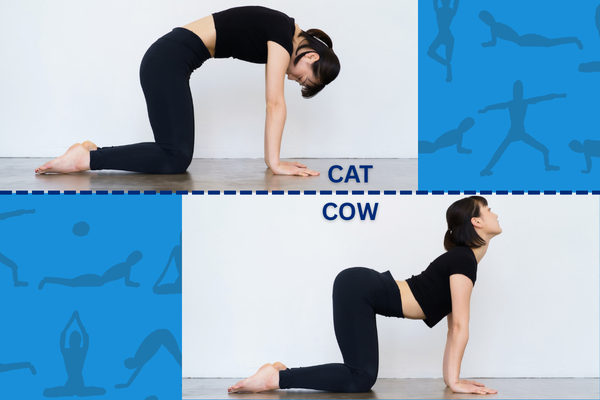
- Cat-Cow Stretch: Get on your hands and knees. Inhale and let your belly sink toward the floor while tilting your head and tailbone up. Exhale and arch your back up toward the ceiling, while rounding your shoulders and tailbone down, like a stretching cat. Repeat slowly five times.
- Child’s Pose: Sit back on your heels, tops of feet on the floor, and lower your chest toward your knees. Extend your arms out straight in front of you. Take deep breaths and hold the stretch for 30-60 seconds to open up your lower back. (If this position isn’t comfortable, widen your knees slightly beyond hip-width.)
Steps to Reduce Back Pain After Pregnancy
Small changes in your daily routine can help protect your back from extra strain and pain. With the constant lifting and carrying of your new baby, it’s important to use correct posture and lifting techniques as much as you can.
Safe Lifting Techniques
- Keep your feet shoulder-width apart to create a solid, stable base.
- Bend your knees and squat down instead of bending over from your waist.
- Hold your baby close to your chest before you stand up using your leg muscles.
- If possible, get a convertible crib with an adjustable mattress. (Although they were best for back protection, drop-side cribs are now banned and should not be used due to safety concerns.) When first setting up the crib for a newborn, put the mattress at the highest level to prevent leaning so far over the side. Just remember to lower the mattress as your baby grows and starts standing and moving more.
- When out and about, consider an ergonomic baby carrier or wrap rather than carrying your infant in your arms. And while it’s tempting to pack everything you could possibly need, try to keep your diaper bag light to avoid putting extra weight on your shoulders.
General Self-Care Actions
- Prioritize Sleep: We know everybody says this, but try to sleep whenever the baby sleeps, even if it’s just a short twenty-minute nap. Sleep helps your body repair damaged tissues, so the more you can get, the better your body will heal.
- Eat and drink: With the stress of a new baby, even if it’s not your first, it’s easy to forget to stay hydrated and eat healthy meals and snacks. But your body needs water and nutrition to heal and build strength. Make sure to feed yourself when you’re taking care of your little one.
- Get Help: Ask friends, family, or neighbors to help with chores, food preparation, store runs, and other household necessities. You can even ask loved ones to watch the baby so you can rest and recover.
If you’re struggling with intense back pain after pregnancy or emotional distress, don’t wait for a 6-week checkup. Make an appointment with your healthcare provider as soon as possible. - Supportive Posture: Sit in a supportive chair with a pillow behind your lower back while breastfeeding or bottle-feeding. An additional pillow or specially designed nursing pillow can help you support your baby and bring the baby up higher without so much strain on your back.
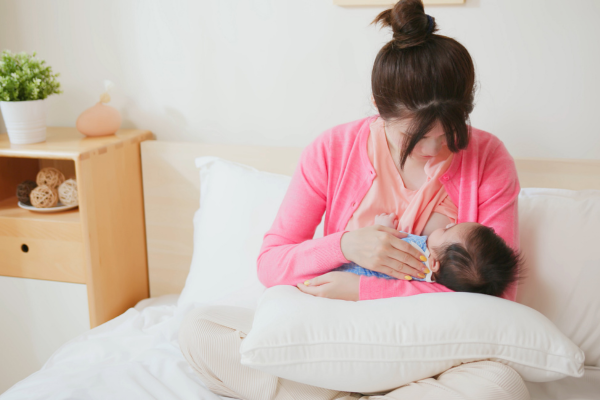
(Photo by Ryan King 999 at https://www.canva.com/photos/MAFEIqirixY/)
Signs Your Postpartum Joint Pain Needs Medical Care
While general soreness is very common, some symptoms mean you need to see a doctor right away.
- Numbness, tingling, or a “pins and needles” feeling in your legs or groin area.
- Sudden weakness in your legs that makes it hard to stand up or walk safely.
- A fever or chills that happen at the same time as your severe backache.
- A sudden loss of control over your bladder or bowels.
While numbness and tingling may not indicate an immediate emergency, they can be a sign of nerve irritation or pinching. If left untreated, it may become so severe that surgery is the only option.
Affordable Care for Back Pain After Pregnancy
We understand that when you’re taking care of your kids, especially a new baby, it feels like your health has to take a back seat. This situation is even more common when money is tight.
But when you’re caring for others, you have to take just as much care of yourself.
Our team is dedicated to providing excellent and affordable healthcare and chiropractic care to our Hurst community. Between payment plans, CareCredit, and lower cash pay options, we strive to make our clinic financially accessible to everyone.
So, if you’re struggling with joint and back pain after pregnancy or don’t know who to turn to for general women’s healthcare, we are here to help.
Schedule an appointment at North Texas Clinic & Rehab today!