
Do you wake up most mornings with a stiff neck that slowly turns into a constant headache throughout the day? You are probably suffering from a cervicogenic headache, referred head pain that actually starts from tension or damage in your neck.
When you have to work, take care of your home, and provide for your family, it’s usually easier to pop a pain reliever than figure out what is causing this daily pain.
But cervicogenic headache relief may be more accessible than you think.
Understanding where the pain starts is your first step in living a more pain-free life without daily pain pills or financial stress.
How Neck Tension Triggers a Cervicogenic Headache
Your neck has to support the weight of your head, which, in a natural position, weighs about 10 to 12 pounds.
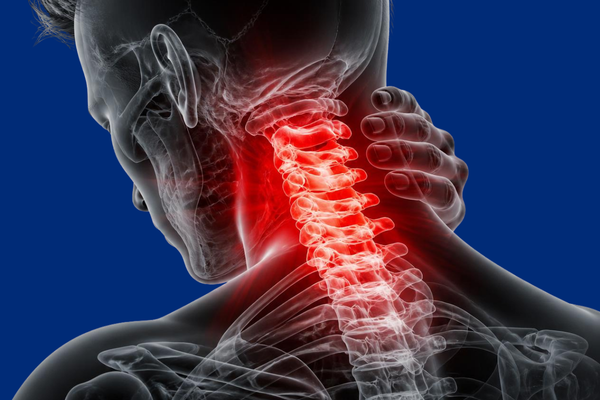
The top part of your spine, known as the upper cervical spine, consists of seven small bones stacked on top of each other. Running between these bones are sensitive spinal nerves (occipital nerves) that travel up from your neck directly into your skull.
And supporting all of that is a network of more than 20 different muscles.
This delicate system works great when you have wonderful posture. But unfortunately, between jobs that keep you looking down too often, frequent phone use, and the pain from holding a posture that no longer feels natural, the system struggles.
The more you look down, the heavier your head feels on your neck. The force of “Tech neck” can cause your head to go from 11 pounds in a neutral position to more than 48 pounds on your cervical spine when pointed down.
That force causes painful tension in your neck and shoulder muscles and your nerves. That pain then travels up into your head, causing what medical providers call a “cervicogenic headache.”
Other than everyday posture habits, your neck can also become temporarily or chronically injured from hard falls, auto accidents (even minor ones!), and other traumatic injuries.
Without fixing the cause, you’ll have a constant headache practically every day.
Symptoms of a Cervicogenic Headache
The easiest telltale sign that your headache started in your neck is if you have tight shoulders, a stiff neck, or have had a recent neck injury.
Cervicogenic headache symptoms will typically include:
- Pain on one side of your head that doesn’t travel to the other side
- A headache that starts at the base of your skull and moves upward, often to the temple or behind the eye
- Difficulty turning your head
- Increased pain when you move in certain ways
You may even have tight, painful shoulders and restricted upper back movement.
Other Types of Headaches and How to Tell the Difference
Of course, not all headaches occur from neck pain or injuries. Knowing how to tell the difference between headache types can help you better understand how to find relief.
Plus, some headaches, even cervicogenic headaches, may be a sign of something more serious going on. So, talking to a healthcare provider is always important if you have frequent headaches of any kind.
There are two main types of headaches: primary and secondary.
Primary headaches are ones where the headache itself is the illness or first source of pain.
Secondary headaches occur when the pain is “referred,” meaning it starts somewhere else and travels. Cervicogenic headaches are secondary because they start in the neck.
Understanding the following types and signs of different headaches will help you talk about it more clearly with your provider.
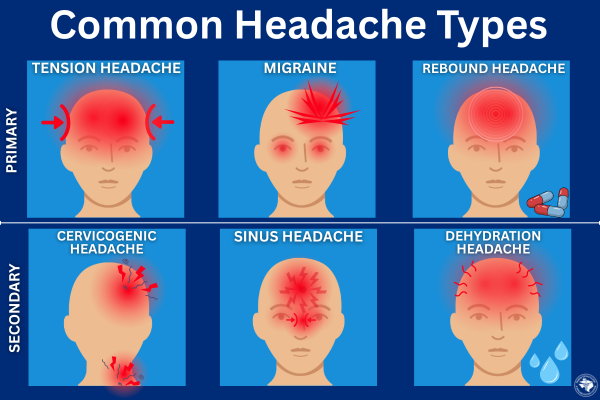
Primary Headaches
- Tension Headaches: The most common type of headache, these feel like a tight rubber band squeezing around your entire head. You may also experience sensitivity to light and sound. There are numerous triggers for tension headaches, but stress, anxiety, poor sleep, and eye strain are typical causes.
- Migraines: These produce a severe, throbbing pain, often on one side of the head. Migraines are typically accompanied by nausea, vomiting, or extreme sensitivity to light and sound.
- Cluster Headaches: These rare but incredibly painful headaches often cause burning or piercing pain on one side of the head and behind the eye, and may even come with nasal congestion, sweating, and flushing on the affected side. They can last as little as 15 minutes, but they often recur multiple times a day.
- Rebound Headaches: These happen when you take pain relievers too often. Over time, your body gets used to the drug, causing a dull, constant headache whenever the medication wears off.
Other Secondary Headaches
- Sinus Headache: Whether you’re struggling with allergies or a cold, swollen and congested sinuses can lead to referred, secondary pain in your head.
- High Blood Pressure Headaches: High blood pressure can cause a dull ache across your forehead or back of the head. A reading higher than 130/80 mm Hg is considered elevated. If your blood pressure spikes above 180/120 mm Hg, it can cause a sudden, severe headache that requires emergency care.
- Dehydration Headache: As its name implies, these dull, throbbing headaches, which may get worse if you bend over, happen when you don’t drink enough water. When you do, they typically go away on their own.
Once you and your medical provider have a good idea of what is causing your constant headache, freedom from the pain is around the corner!
Cervicogenic Headache Relief – The Natural Way
If your head pain is actually referred neck pain, chiropractic care might be the best option for you.
Beyond acute injury or degenerative joint issues, prolonged sitting, poor posture, and misaligned neck joints are common causes of neck pain.
A chiropractor can slowly ease your joints back into place, reducing muscle tension and nerve pinching.
Plus, we can help you improve your posture, strengthen your back and core muscles, and increase mobility in your joints with specific habit changes and exercises.
We understand that regular chiropractic care might not be in your budget, especially if you are uninsured. But we strive to make sure everybody gets the care they deserve with transparent pricing, affordable cash pay options, and CareCredit.
Plus, if your neck pain is a result of a personal injury or workplace incident, we have the knowledge and experience to help you with required paperwork so that you don’t have to pay out-of-pocket for care. (We can even help with attorney referrals!)

Home Relief Steps vs. Warning Signs
If you are unable to come to our clinic or talk to another healthcare provider, knowing how to get cervicogenic headache relief at home, without daily pain pills, is vital. You also need to understand what to look for if something more serious is going on.
These small, safe steps will help reduce pain and improve spinal health:
- Apply a warm, moist towel or heating pad to the back of your neck for 15 minutes to relax tight muscle fibers.
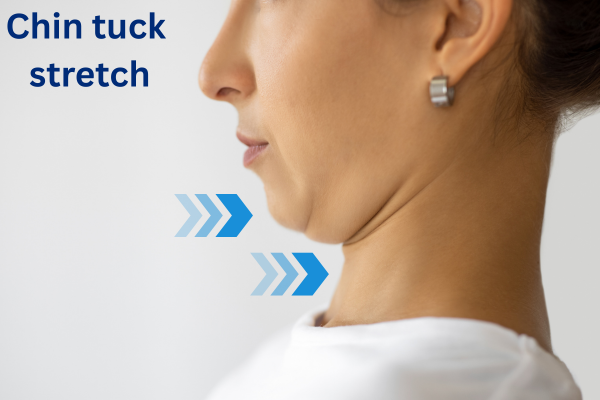
- Perform simple chin tucks by pulling your head straight back as if making a double chin. Hold for 5 seconds and repeat 5 times every morning. (For even better results when you’re strong enough, try chin tucks while lying on your back!)
- If it’s not too painful, perform head rotations by pretending to draw a big circle (or as big as you comfortably can) with your nose. Rotate your head several times one way, and then reverse.
- Take a 2-minute posture break every 40 minutes while working or looking at your phone to reduce strain. Use that time to do simple neck stretches or give your tense shoulder and neck muscles a massage.
- Whether using a computer or phone, try to make sure your screen is at eye level rather than looking down at it.
Red Flags to Watch For
To make sure your constant headache isn’t pointing to something with life-threatening impacts, make an appointment with your healthcare provider soon if you notice the following signs:
- Pain that lasts longer than 3 days without any improvement
- Headaches that change pattern or increase in frequency or intensity
- Pain worsens when you cough, sneeze, strain, or bend over
- Need pain relievers more than 2 days per week to get through your day
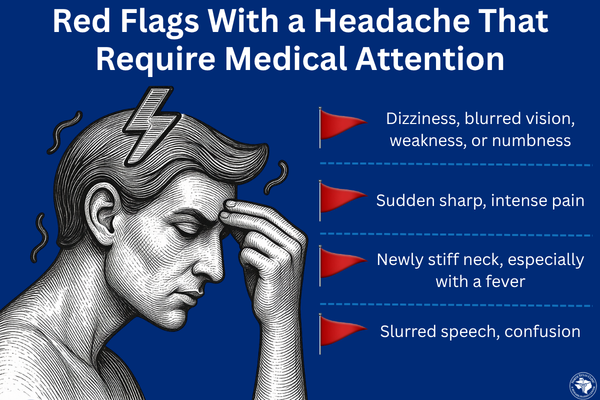
Call 911 or go to the emergency room immediately if you have:
- Headaches accompanied by dizziness, blurred vision, weakness, or numbness in your arms or fingers
- Sudden sharp, intense pain, unlike anything you’ve felt before
- A newly stiff neck with a headache, especially if accompanied by a fever
- Slurred speech, trouble speaking, or confusion
You know your body better than anybody else. If something feels off, do not ignore it. Get help as soon as possible.
The Hidden Danger of Relying on Daily Pain Medication
When you are dealing with daily pain, picking up a five-dollar bottle of ibuprofen or acetaminophen can feel like the only affordable choice.
Seeing a neurologist or getting expensive scans can cost hundreds or even thousands of dollars. For families living on a tight budget, specialist visits are often out of reach.
Unfortunately, taking pain relievers every single day carries real medical risks.
Overuse of non-steroidal anti-inflammatory drugs can irritate your stomach lining, leading to painful ulcers or stomach bleeding. They can also reduce blood flow to the kidneys, which can cause serious, chronic injury to these vital organs.
Taking excessive amounts of acetaminophen can strain your liver over time.
And, as previously mentioned, frequent pain reliever use can cause rebound headaches when the drugs wear off.
Most importantly, pills only numb the nerve signal for a few hours. They do not fix the pinched nerve or misaligned bone in your neck. They are a band-aid, not a cure.
Cervicogenic Headache Relief in Hurst
Living with a constant headache makes every part of life harder, from working to spending quality time with your family. It can even impact your sleep and mental wellness.
If that sounds familiar, you do not have to suffer through it alone.
Our compassionate, integrated team at North Texas Clinic & Rehab is here to provide affordable care tailored to your needs.
We offer expert chiropractic care, pain-relieving massage therapy, injury-recovering physical rehabilitation, medical treatments, and imaging referrals. We can help pinpoint exactly what’s going on so we can treat the root cause of your cervicogenic headache more effectively.
If you’re ready to start living a healthier, more pain-free life, walk in or schedule an appointment at our clinic in Hurst today.