
Feeling run-down, congested, or achy can make it hard to tell what’s really going on. All you know is you feel awful. But knowing whether you have the flu or a cold can help you decide whether to push through it or go to urgent care.
Many people assume they “just have a cold” and try to tough it out, only to feel much worse a day or two later.
While colds and the flu are both common viral illnesses, they affect the body differently. Knowing the early differences can help you decide when to rest at home, when to seek care, and how to recover safely.
Key Differences Between the Flu and a Cold
In the early stages, colds and the flu can look very similar. Both often cause fatigue, congestion, a runny nose, a sore throat, and headaches.
So how do you tell the difference?
How Quickly Symptoms Start
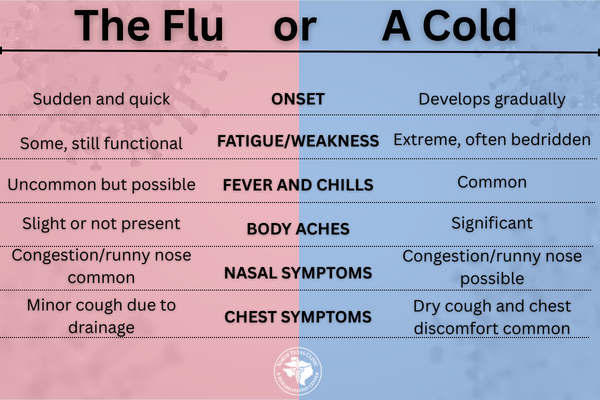
The major difference often occurs in the first 24–48 hours. The flu tends to come on suddenly and intensely, while a cold usually builds more slowly.
With a cold, symptoms usually develop gradually over a few days. It may start out feeling like seasonal allergies before you realize you are actually sick.
But with the flu, symptoms often set in quickly. You may feel fine one day and very sick the next.
Ability to Function
Another key difference is the severity of your illness.
With a cold, you can generally still function and work through it, even if it’s uncomfortable. (However, you should still stay home to prevent others from catching it!)
Whereas, with the flu, most people struggle to even get out of bed, much less work or handle everyday routines.
Body Aches and Fatigue
A third indicator between the flu and a cold is how your whole body feels.
A cold may cause mild body aches and manageable tiredness.
The flu, on the other hand, can come with intense body aches due to your immune system’s inflammatory response to the virus. In addition to the achiness, you’ll probably feel extremely exhausted and weak.
Other Symptom Differences Between the Flu and a Cold
Many respiratory infections, such as the flu and the common cold, share similar symptoms, making it harder to determine what you have. However, slight variations can give you a clue.
Whether you have the flu or a cold, chest and nasal symptoms are likely. But a cold is typically more irritating in the upper respiratory areas, causing nasal congestion, a runny nose, and sneezing.
The flu, however, tends to affect your chest more than your nose, causing a dry cough and breathing discomfort.
Both infections can cause fever and chills, but they are much less common in adults with a cold.
Can You Have the Flu Without a Fever?
Yes, you can have the flu without a fever, especially in adults.
While fever is a common flu symptom, it’s not guaranteed. Some people never develop a noticeable fever, or it may come and go quickly. This is more likely in:
- Adults over 40,
- People who take fever-reducing medications early,
- And people with weaker immune responses.
In these cases, severe fatigue, body aches, headache, and sudden weakness can be stronger clues than temperature alone.
If you feel unusually wiped out, achy, and unwell — even without a fever — the flu is definitely possible.
Why Identifying the Flu Early Matters
Recognizing flu symptoms early can:
- Help you rest before symptoms worsen.
- Reduce the risk of spreading illness to others.
- Allow earlier treatment if needed.
- Prevent complications like dehydration or secondary infections.
Pushing through the flu often leads to a longer recovery, more missed time, and increased discomfort. For some individuals, the flu may even be dangerous to ignore.

When to See a Medical Provider for the Flu or a Cold
You should consider medical care if:
- Symptoms are severe or worsening.
- You have trouble breathing or significant chest pain.
- Fever lasts more than a few days or returns after improving.
- You’re pregnant, older, or have chronic health conditions.
- You’re unsure what’s causing your symptoms.
Urgent care clinics can evaluate flu symptoms, offer testing when appropriate, and help guide quicker treatment and a safe recovery.
Safety First With The Flu or a Cold
A bad cold can make you miserable, but the flu often stops you in your tracks. Sudden onset, intense fatigue, and body aches are key signs that it may be more than just a cold, even if you don’t have a fever.
Listening to your body and getting help when something feels “off” can shorten recovery and protect your long-term health, whether you have the flu or a cold. Plus, flu testing can rule out other infections, such as COVID-19.
If you’re experiencing symptoms that are making it hard to work or take care of yourself, call us today!